
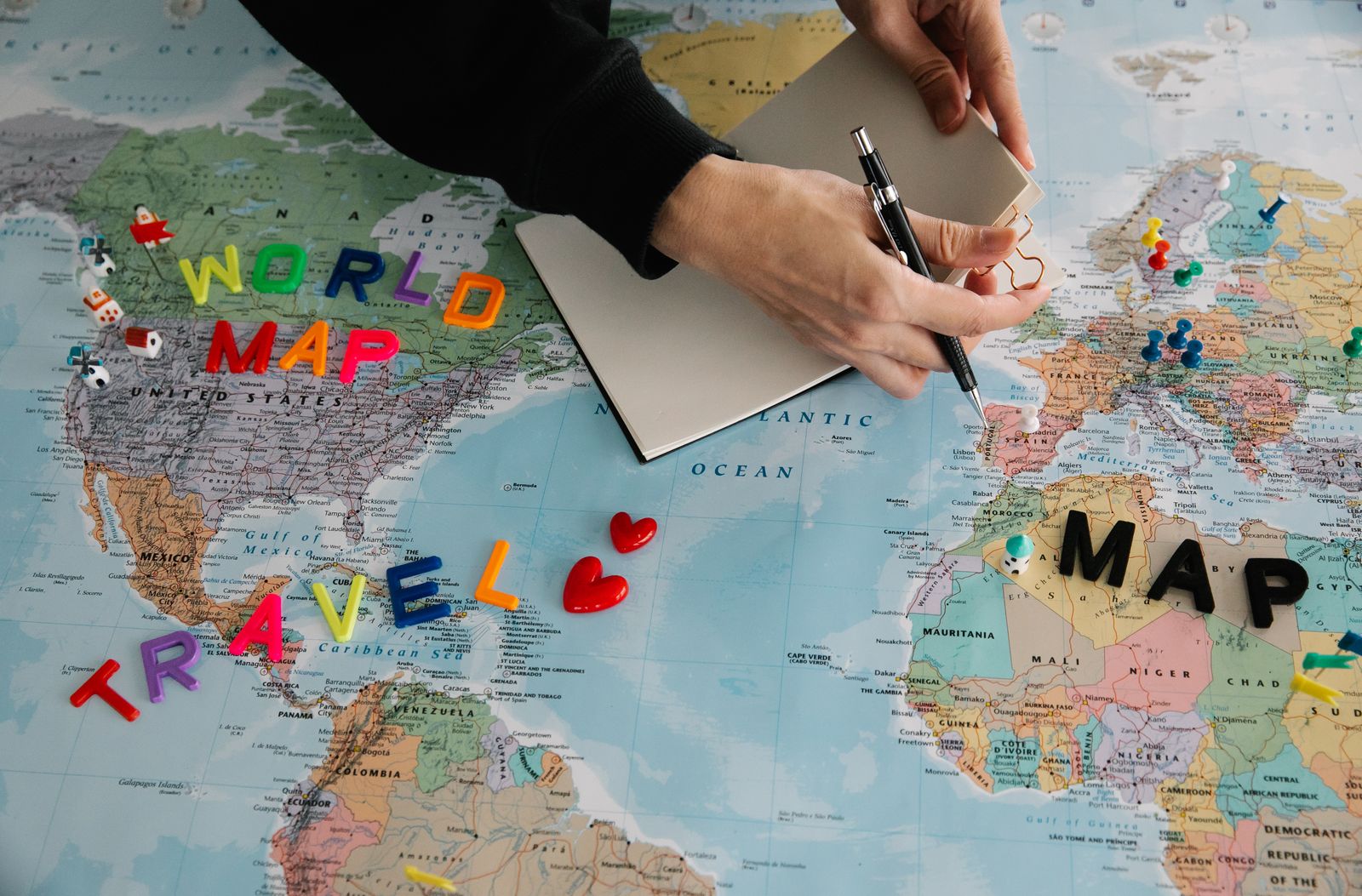
An international home exchange is where the system shows what it can really do: it is precisely on long haul trips that accommodation devours the budget, and removing it changes what is possible. Here is how it works beyond your own borders, which destinations have the most supply, what paperwork is involved, and how to solve the language, the distance and the keys.
Why it pays off more the further you go
On a weekend two hundred miles from home, accommodation is a small share of the spend. On a three week trip to Japan, Canada or the United States, it is half.
A twenty one day international home exchange in a major North American city removes somewhere between three thousand and four thousand five hundred pounds of accommodation. For many families that figure is exactly the difference between making the trip and postponing it another year.
Which destinations have the most supply
- Western Europe. France, Italy, Germany, the Netherlands, Spain and Portugal carry the largest volume of available homes.
- North America. The United States and Canada, with heavy supply in suburban areas of large family houses.
- Oceania. Australia and New Zealand, ideal for long exchanges given the flight distance.
- Latin America. Argentina, Chile, Mexico and Colombia, with a growing community.
- Asia. Japan and South Korea, with less supply but high demand.
Language is not the obstacle it appears to be
Most conversations resolve in functional English, and platforms translate listings automatically. Writing your request in the other family’s language, even with a translator, makes a noticeable difference to the reply rate.
For the house guide, the practical approach is to leave it in two languages. Half an hour of work that saves a dozen messages during the stay.
Paperwork and requirements
An international home exchange changes nothing about the administrative side of your trip: you need exactly the same documentation as if you were staying in a hotel.
A valid passport, a visa if the destination requires one, and travel insurance with medical cover outside your own country. It is worth checking the current requirements for each country on the official foreign travel advice before fixing dates, because several destinations have changed their entry conditions in recent years.
If you travel with a pet, the health documentation is the item requiring most lead time.
The logistics of the keys
This is the most common practical worry and it has three standard solutions.
- A trusted neighbour or relative who hands over and collects the keys. The most common option and the most useful, because it also gives you a local contact to ask.
- A key safe with a code fitted beside the door.
- A direct handover when the exchange is not simultaneous and the calendars overlap by a day.
Time zones and cultural differences
With eight or ten hours of difference, real time communication disappears. Everything important therefore has to be written before the trip: rules, instructions, emergency numbers and one local contact for each side.
And it is worth anticipating domestic details that vary between countries: different plug sockets, different heating systems, appliances that behave in unfamiliar ways. A photograph of the washing machine panel with two annotations saves a great deal.
How much lead time you need
A domestic swap can be settled in six weeks. An international one needs four to eight months, because you are coordinating flights, school holidays in two countries and sometimes visas.
The practical rule is to start searching as soon as you know your dates, even if that is almost a year out.
Frequently asked questions
Is an international home exchange safe? It works exactly like a domestic one: verified profiles, public reviews and platform guarantees. Distance does not change the symmetry of the trust.
What if I do not speak the language? Automatic translation handles written conversation without difficulty.
Can I swap my small flat for a large house? Yes. What gets compared is not square metres but how interesting each destination is.
How long does a typical international swap last? Between two and four weeks, precisely because of the cost of the flight.
Where to start
Publish your listing in English as well and mark generous date ranges. Then write three well personalised requests using the structure in the home exchange request guide. The general process is in the complete home exchange guide.
4 thoughts on “International Home Exchange: 5 Keys to Travelling Far”