
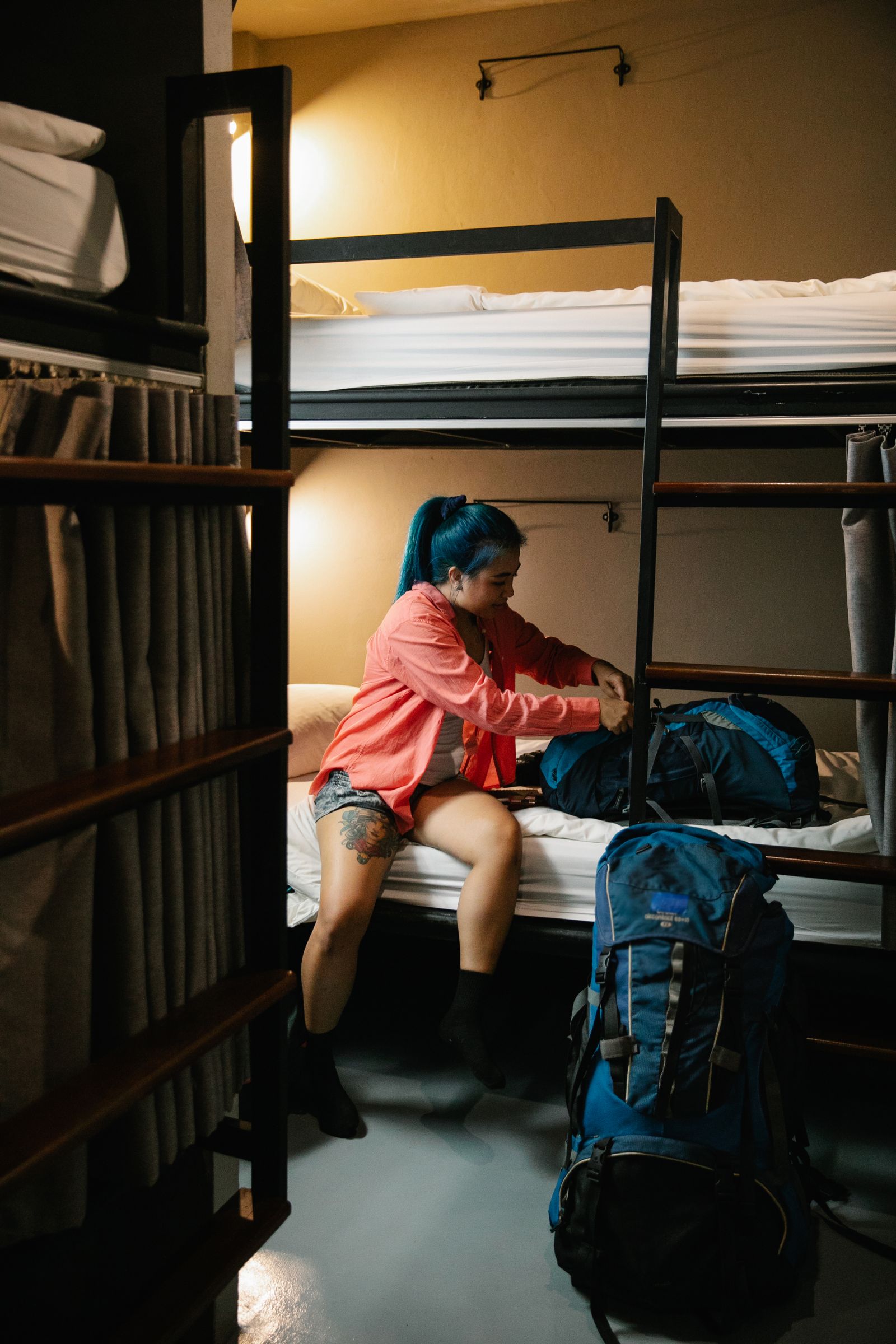
Learning to travel on a budget is not about giving things up. It is about knowing where the money actually goes. On an average trip, two lines account for more than seventy per cent of the spend, and almost everyone devotes their energy to optimising the remaining thirty. These are the ten moves that genuinely shift the total, ordered by impact.
1. Remove accommodation rather than negotiate it
By some distance the most powerful lever. Accommodation represents forty to sixty per cent of a family travel budget.
A home exchange reduces it to zero: two families lend each other their home with no payment involved. No hotel offer comes remotely close to that saving.
2. Cook half your meals
The second line is food. Four people eating breakfast and dinner out for a fortnight comfortably passes a thousand pounds.
Having a kitchen turns the restaurant into a choice rather than a daily obligation. It is why staying in a real home rather than a room changes the budget twice over.
3. Move your dates by three days
Departing on a Tuesday rather than a Friday, or returning on a Wednesday rather than a Sunday, changes flight prices noticeably. The same applies to the last week of June against the first week of July.
4. Travel in shoulder season
June and September on the Mediterranean give you warm water, fewer people and markedly lower prices on everything. It is the most repeated advice on how to travel on a budget and it remains the most effective.
5. Choose well connected destinations
A destination you can reach and move around by public transport saves two whole lines: car hire and parking. In many European cities that is three to five hundred pounds a trip.
6. Stay longer in fewer places
Changing city every two days multiplies transfers, journeys and meals eaten in transit. Ten days in one place costs less than ten days split across four, and it is far more enjoyable.
7. Book flights genuinely early
Two to four months ahead for Europe, four to eight for long haul. Last minute deals exist but they are the exception and rarely fit a family calendar.
8. Use what the destination gives away
Beaches, parks, markets, walking routes and museums with free entry days. Most European cities have a day or a time slot when public museums are free, and the official tourism boards publish it; the national tourism board is the reliable starting point for the UK.
9. Travel with less luggage
If the accommodation has a washing machine, you travel with half the clothes. That lets you skip checked baggage on many flights, a saving multiplied by the number of travellers and by both legs of the journey.
10. Repeat with the same people
An exchange that becomes an annual fixture removes the cost of searching, negotiating and verifying. Many families end up with two or three trusted homes they return to every year.
What is almost never worth it
- Chasing ultra cheap flights with twelve hour layovers and two nights lost.
- Staying far from the centre to save twenty pounds and spending thirty on transport.
- Buying cancellation cover that doubles the price of the ticket.
- Booking organised excursions for things you can do alone and free.
Frequently asked questions
Does travelling on a budget mean travelling worse? Not if the saving comes from removing accommodation rather than cutting the experience.
Does it work for short breaks? Yes, though the absolute saving is smaller. Moves 3, 5 and 8 pay off most.
Which move has the biggest impact? The first, without argument.
What if I travel alone? The proportions change but the order holds: accommodation and food still dominate.
Where to begin
Take your last trip and separate out what you paid to sleep. That number is your margin. How to remove it is in the complete home exchange guide, and you can work out your own case in the article on how much you save.